


Reader Advisory: The following story contains intense and unsettling themes. It may not be suitable for all readers. Proceed with caution if you’re sensitive to dark or disturbing content.
Disclaimer: All the stories under #StorySutra are works of fiction. Names, characters, places, and incidents are either the products of the author’s imagination or are used fictitiously. Any resemblance to actual events, locations, or persons, living or dead, is purely coincidental. The author does not intend to malign any individual, group, or organisation.
© Lekhak Anurag. Any unauthorised reproduction, personal or commercial, without permission is prohibited. For reproduction or commercial use of the story, please ping me on mailme[at]lekhakanurag[dot]com.
The empty house
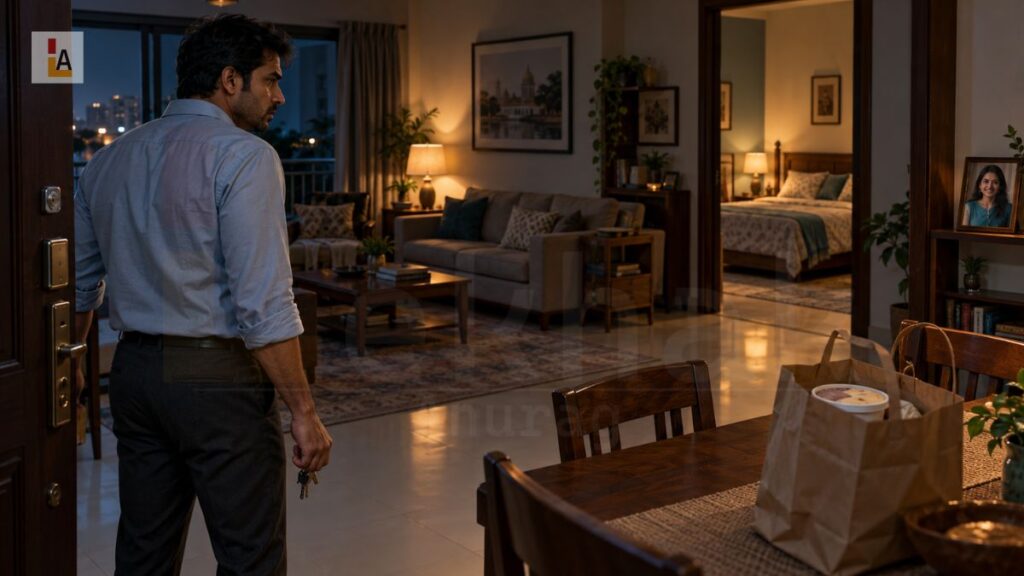
“Maithili! Maithili! I’m home! Why weren’t you picking up my calls? Maithili!” Pratik almost screamed as he entered the house. He had been trying to reach her for over an hour. At first, he had assumed she was busy, but when his tenth call went unanswered, he had started worrying.
It was almost 11:30 PM. Pratik had returned from Gurugram after meeting a client in connection with a corporate fraud investigation. He had spoken to Maithili around eight and told her that he would be late. She had asked him to bring ice cream. “Chocolate. And don’t bring that sugar-free nonsense again,” she had said. “Last time you said you were avoiding sugar,” he protested. “Last time I was. Today I’m not.” The ice cream was now sitting in a bag on the dining table.
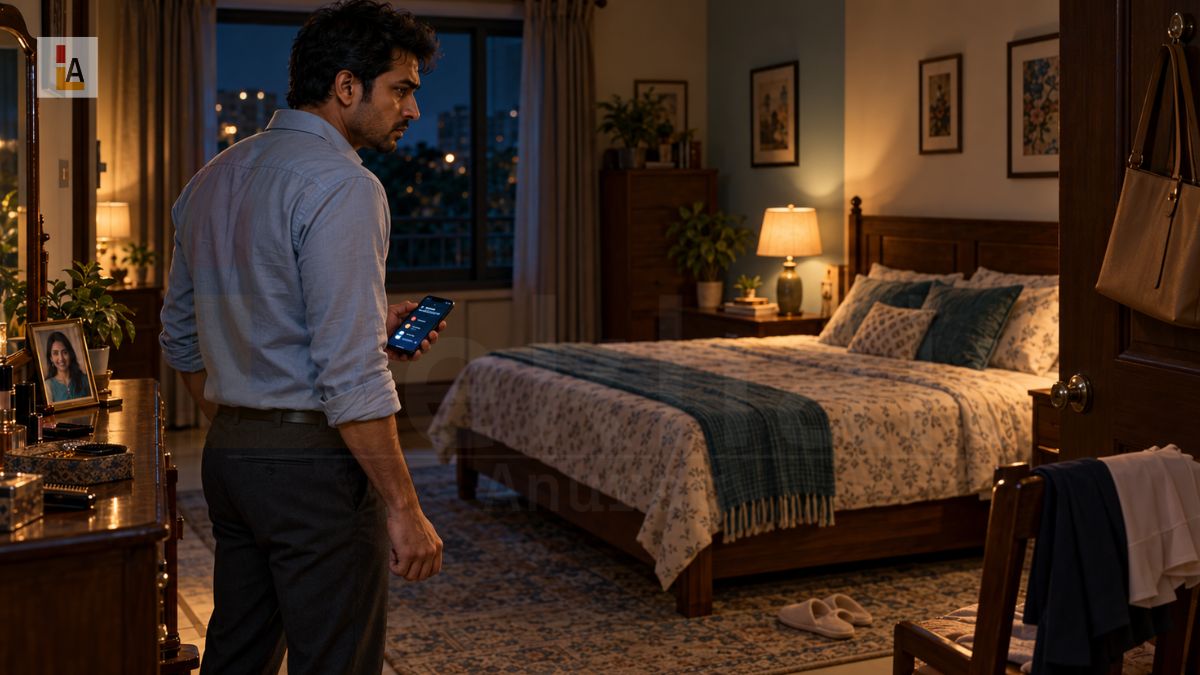
“Maithili! Arre kahan ho yaar?” he shouted again, switching on the bedroom lights. The bed was neatly made. Her slippers were beside it, and her phone was lying on the dressing table. He picked it up. Seventeen missed calls from him. The battery was at 63 per cent.
He checked the bathroom, kitchen, balcony and the small room they used as a study. Nothing. Her handbag was hanging behind the bedroom door. Her wallet, car keys and spectacles were all there. Even the clothes she had worn to work were folded on a chair.
Pratik called her mother in Jaipur. “Namaste Mummy. Maithili se baat hui kya aaj?”
“Haan beta, shaam ko hui thi. Kyun?”
“Nahi, bas aise hi. Main baad mein karta hoon.”
He disconnected the call before she could ask anything else. For the next fifteen minutes, he searched the house again, including places where no sensible person would expect to find a missing adult. He opened the wardrobe, checked the terrace and even looked inside the store cupboard.
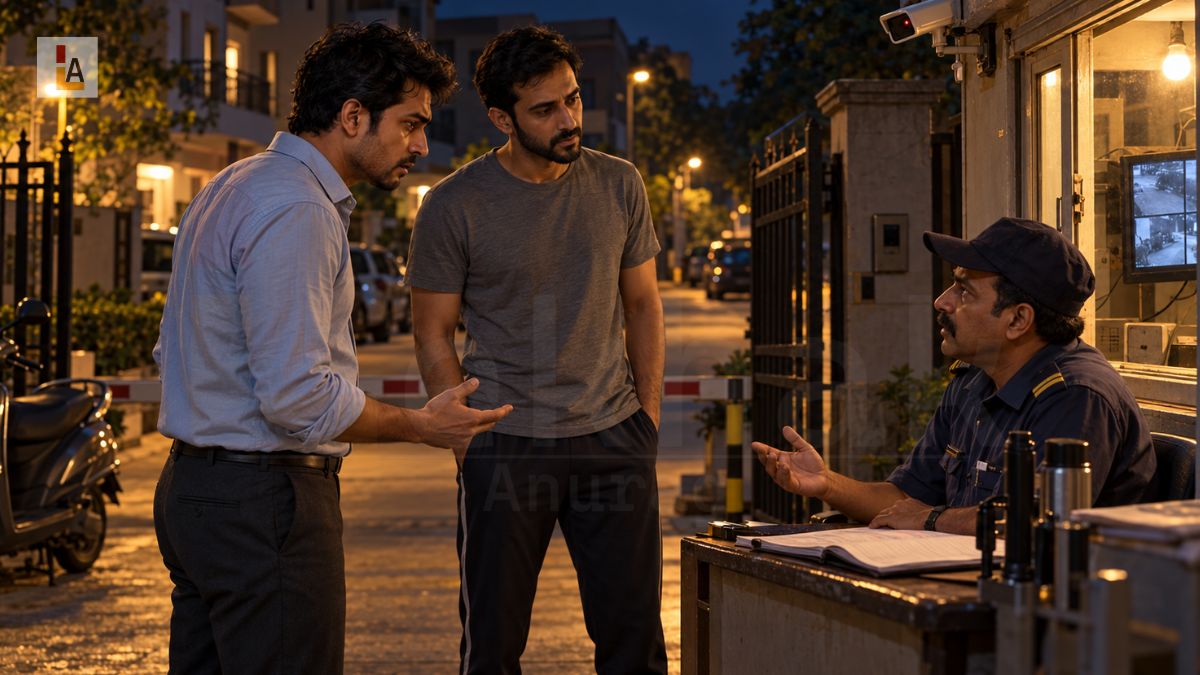
Finally, he rushed outside. Two houses down the street lived Zubair Khan, his childhood friend and business partner. Pratik rang the bell repeatedly.
“Zubair! Zubair, darwaza khol!”
The door opened within a minute. Zubair was wearing a grey T-shirt and track trousers. He had a book in his hand.
“Kya hua? Itni raat ko?” “Maithili nahi mil rahi!”
“What do you mean?”
“Ghar pe nahi hai. Phone ghar pe hai. Purse ghar pe hai. Main ek ghante se call kar raha tha. Kuch samajh nahi aa raha.”
Zubair put the book on a nearby table, picked up his keys and followed Pratik without asking another question.
The search begins
Pratik had once agreed to investigate a suspected extramarital affair for a woman who could not pay their fee. “Why did you accept the case?” Zubair had asked. “Because she needs help.” “Then pay the office rent with her blessings.” They had taken the case without charging her. Maithili liked to say their arguments were the agency’s only reliable source of entertainment.
Pratik and Zubair had known each other since Class III. Their fathers worked in the same government department, and both families had lived in the same colony in Delhi before moving to different parts of the city. They went to the same school, studied different subjects in college and eventually started a private investigation agency together. Pratik handled clients, interviews and fieldwork, while Zubair specialised in research, documentation and digital investigations.
Zubair was an introvert. He rarely attended social gatherings and preferred spending his evenings at home. His office desk was always organised, his files were labelled, and he maintained a separate notebook for every case. Pratik often joked that Zubair would probably prepare an Excel sheet before going on a date.
“Bhai, tu shaadi mat kariyo. Biwi ko bhi alphabetically arrange kar dega,” Pratik had once told him.
“Tu apni sambhal le pehle,” Zubair had replied.
They had been running the agency for almost seven years and had developed a reputation for handling matrimonial disputes, missing-person cases and corporate investigations.
Now, for the first time, they were searching for someone from their own family.
Zubair examined the house carefully. He checked the doors, windows and balcony. There was no visible damage or sign of forced entry. The kitchen was clean, except for a cup of tea on the counter.
“When did you last speak to her?” he asked.
“Eight. Around eight.” “What did she say?”
“Nothing unusual. Asked me to bring ice cream.”
“Did she mention going anywhere?”
“No.”
“Any argument between you two?”
Pratik looked at him angrily. “Abey, kya pooch raha hai?”
“Pratik, I need to know. Tu bhi investigator hai. You know why I’m asking.”
“No. We didn’t fight. Everything was fine.”
They checked the security cameras installed at the colony entrance. The guard on duty said he had not seen Maithili leaving. Unfortunately, one camera had stopped working earlier that evening, and the other covered only the main gate.
By 1 AM, they had called six of Maithili’s friends, two colleagues and three relatives. Nobody knew where she was.
“Police station chalte hain,” Zubair finally said.
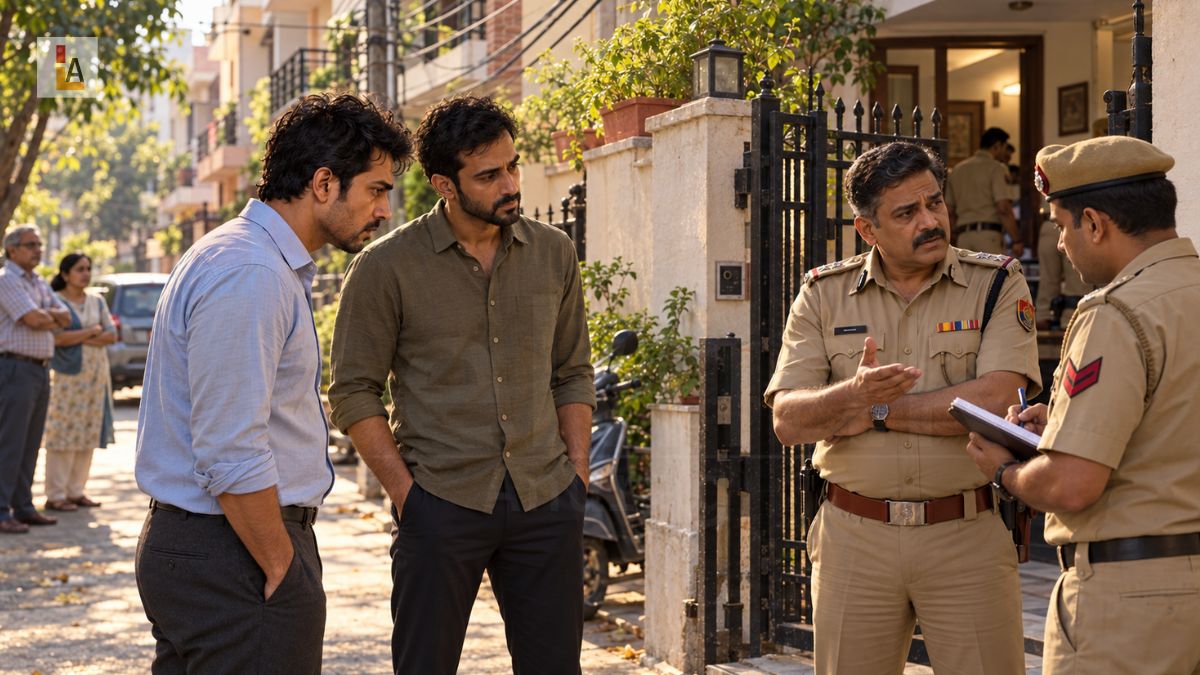
The duty officer at the local police station initially asked them to wait until morning. Pratik became furious.
“My wife is missing, her phone and belongings are at home, and you’re asking me to come tomorrow?”
“Sir, aap shaant ho jaiye. Hum mana nahi kar rahe,” the officer replied.
Zubair intervened. He explained that they were private investigators, provided the necessary details and requested immediate assistance. After speaking to a senior officer, the duty officer began recording the complaint.
Inspector Rajeev Malhotra arrived around two in the morning. He listened carefully and sent two constables to examine the house.
“Mr Pratik, we will investigate every possibility. But please understand that adults sometimes leave voluntarily. We cannot assume a crime without evidence,” he explained.
“Sir, Maithili wouldn’t leave without telling me.”
“That’s what we need to establish.”
By sunrise, Pratik had not slept for a minute. Zubair made tea, called their office assistant and cancelled all appointments for the week.
“Tu ghar jaake so le,” Pratik told him. “Chup kar. Chai pee.”
The neighbour
On the first morning, police collected Maithili’s recent photographs and began checking hospitals, transport records and available CCTV footage. Pratik and Zubair prepared their own timeline of her last known movements.
Maithili worked as a senior accounts executive at a private company in Connaught Place. Her colleagues confirmed that she had left the office around six. A cab driver remembered dropping her near the colony at approximately 6:45 PM.
That was the last confirmed sighting.
Pratik visited the cab driver personally. Zubair checked nearby shops and residential buildings for cameras. They worked almost continuously, returning home only to change clothes or collect documents.
On the second afternoon, Maithili’s colleague Ritu rang Pratik. “I don’t know whether it’s important, but she seemed irritated the day she disappeared,” she said. “With whom?” “She didn’t say. Just that someone was interfering in things that didn’t concern them.” Pratik told Inspector Malhotra, who arranged to speak to her colleagues again. Pratik tried to remember whether Maithili had complained about anyone recently. There had been an argument with a vendor at work and a neighbour who parked outside their gate. Neither seemed particularly important.
On the third day, an elderly neighbour named Harish Batra was found dead in his house.
Batra lived alone, four houses away from Pratik. His domestic help discovered the body after he failed to answer the door. The initial examination suggested that he had suffered a head injury, and police registered a case of suspected murder.
Pratik knew him reasonably well. Batra was a retired bank manager who spent most evenings walking around the colony and complaining about vehicles parked outside his gate.
“Arre yaar, Batra uncle bhi!” Pratik said when he heard the news.
Zubair was reviewing a list of nearby CCTV cameras. “What happened?”
“Someone killed him. Police are there.”
They went to Batra’s house, where Inspector Malhotra was supervising the investigation.
“Sir, any connection with Maithili?” Pratik asked.
“Nothing suggests that at present. Please don’t mix the two cases.” “But the timing?”
“Mr Pratik, Delhi has more than one criminal.”
Pratik did not argue. He was too exhausted.
That evening, Maithili’s parents arrived from Jaipur. Her mother cried continuously, while her father kept asking Pratik whether they had argued before she disappeared.
“Maine kuch nahi kiya, Papa,” Pratik finally said, breaking down.
“I am not blaming you, beta. I just want to know what happened.”
Zubair arranged accommodation for them, brought food and remained at the house until everyone had gone to bed. He also persuaded Pratik to eat something after almost two days.
“Bhai, ek roti kha le. Behosh ho gaya to Maithili ko kaun dhoondhega?”
Pratik reluctantly took the plate.
The wrong car
One evening, Pratik received a message from an unknown number: “Your wife is alive. Stop asking questions.” He contacted Inspector Malhotra immediately. Police traced the message to a man who admitted sending it after seeing Maithili’s photograph online, hoping to frighten Pratik into paying him money. “Sir, ek baar bas. One minute,” Pratik said when he saw the man at the station. Malhotra ordered him outside.
By the end of the first week, the police had examined dozens of recordings and questioned several people. A few residents claimed to have seen a woman resembling Maithili near a shopping complex in Rohini. Pratik and Zubair spent an entire day following the lead, only to discover that the woman was a schoolteacher who lived nearby.
Another caller claimed that Maithili had boarded a bus towards Haridwar. That information also turned out to be incorrect.
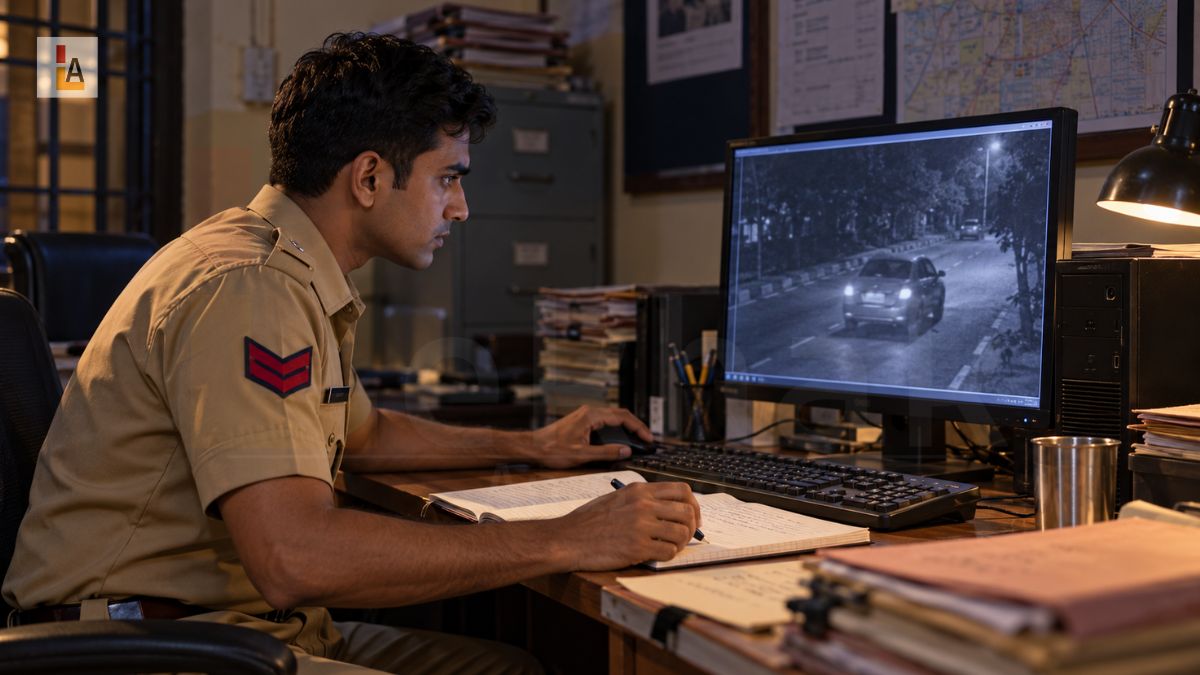
Meanwhile, Constable Deepak Yadav, who was assisting the police investigation, had been reviewing footage from roads connecting Delhi to neighbouring districts.
Deepak was twenty-eight and had joined Delhi Police five years earlier. He was known for his enthusiasm, although his seniors occasionally complained that he spent too much time pursuing minor details.
One afternoon, he approached Inspector Malhotra.
“Sir, ek footage hai. I want to verify something.”
“Kya hai?” “A car. It was recorded on a road towards the forest belt outside Delhi on the night Maithili disappeared. I think it belongs to someone from her colony.”
“Registration number?”
“Not completely visible, sir. I’m checking another camera.”
“Fine. Verify it and submit the details.”
Deepak continued examining the recordings. He had also spoken briefly to Zubair during an earlier visit to the police station, asking him about vehicles registered to residents of the colony.
Two days later, Deepak was found dead after an apparent road accident. His motorcycle had been discovered near an isolated stretch of road, and the circumstances were considered suspicious enough for a separate investigation.
Inspector Malhotra was visibly upset.
“He was a good officer. Very hardworking,” he told Pratik when they met.
“Was he working on Maithili’s case?” Pratik asked.
“Yes. Among other things.”
“Did he find anything?”
“Nothing verified that I can share.”
Pratik returned to the office disappointed. Zubair was sitting at his desk, reviewing the timeline.
“Deepak bhi gaya,” Pratik said.
“I heard.”
“He was checking some footage. Malhotra isn’t saying what.”
“Police will examine his work. We should continue with our own leads.”
Pratik sat down and covered his face.
“Zubair, kya ho raha hai yaar? Pehle Maithili, phir Batra uncle, ab Deepak. I don’t understand anything.”
Zubair closed the file and brought him a glass of water.
“We’ll keep looking.”
Three days after Deepak’s death, Inspector Malhotra arrived at the agency with two officers. “We need to clarify your movements on the night Maithili disappeared,” he told Zubair. “Your car resembles one recorded on a road outside Delhi.” Zubair answered their questions and agreed to let them examine the vehicle. Pratik followed them downstairs. After they left, he apologised to Zubair for the questioning. “Why are you apologising?” Zubair asked. “They’re doing their job.”
The shopkeeper
The second week brought another possibility.
A delivery driver told Pratik that he remembered seeing a woman resembling Maithili near a small market on the outskirts of Delhi. He was not certain about the date, but he remembered that she had been standing beside a parked vehicle.
Pratik and Zubair visited the market immediately.
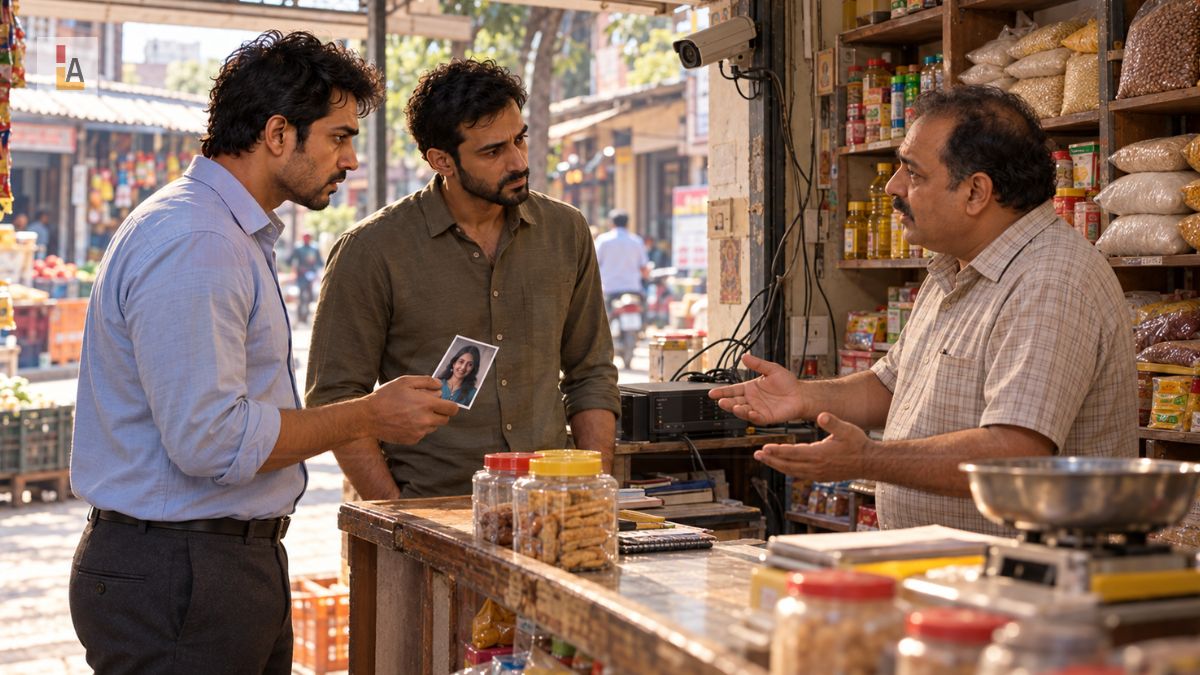
There were six shops, a tea stall and a small grocery store owned by a man named Ramesh Gupta. Two shops had cameras facing the road. One recording was unavailable because the system had malfunctioned. The other camera belonged to Gupta.
“Bhaiya, footage milegi?” Pratik asked.
“Police wale bhi aaye the. Maine bola tha check kar lo. Abhi system mein problem aa rahi hai,” Gupta replied.
“Can we see the recorder?”
“Technician ko bulaya hai. Kal tak ho jayega.”
Pratik left his number and requested Gupta to call him as soon as the system was working.
For the first time in several days, he seemed hopeful.
“Zubair, agar footage mil gayi na, kuch to pata chalega.”
“Haan. Let’s wait for the technician.”
Gupta telephoned Pratik the next morning to say that a technician had managed to access part of the recording. Pratik was due at the police station, so Zubair offered to visit the shop first. When Pratik arrived later, Gupta’s shutters were down. Zubair said the footage was still not ready. They agreed to return the next day.
The following evening, Gupta’s body was discovered inside his shop. Police suspected murder. The shop had been closed earlier than usual, and the CCTV recording relevant to the inquiry could not be recovered.
Pratik was stunned.
“Three deaths in less than two weeks. What the hell is happening?”
Inspector Malhotra was equally frustrated. “We are investigating Gupta’s murder. Please let us do our job.”
“Sir, he had footage that might have shown my wife!”
“We know. Our technical team is examining the equipment.”
“Then why is everything going wrong just when we’re about to find something?”
“Mr Pratik, I understand your frustration, but we cannot make assumptions.”
Outside the police station, Pratik kicked an empty plastic bottle lying near his car.
“Saala, kuch nahi ho raha!”
Zubair waited until he had calmed down.
“Let’s go home.”
“No. I want to check the market again.”
“We’ve already checked it twice.”
“Then we’ll check it a third time!”
They returned to the market and spoke to nearly every shopkeeper. Nobody remembered seeing Maithili. One person suggested that the delivery driver might have mistaken someone else for her.
By midnight, Pratik was sitting on the pavement outside the closed grocery shop.
“I’m losing her, Zubair.”
Zubair sat beside him.
“We haven’t stopped searching.”
Malhotra questioned the shopkeepers, reviewed Deepak’s work and asked both investigators to account for their movements. He asked Zubair again whether he had handled Gupta’s recorder. Zubair said he had not. A shopkeeper remembered seeing him arrive, but could not say when he left. The police examined his car and questioned other owners of similar vehicles. The road footage showed no readable registration number, and the examination of his car yielded nothing that linked it to Maithili. When Pratik asked about the deaths, Malhotra pulled Deepak’s notes from a file. “He thought he had something. We’re still trying to verify it.”
After another interview, Pratik asked Zubair, “Do you think the police suspect you?” “They’re checking everyone.” “That’s not what I asked.” Zubair waited before asking, “Do you suspect me?” Pratik looked offended. “Pagal hai kya? I’ve known you since we were eight.”
No trace of Maithili
Three weeks passed. Then four. Maithili’s disappearance received some local media attention after her family circulated photographs on social media. A few news channels briefly covered the case, but there were no significant developments.
Police examined her financial transactions, communication records and professional relationships. There was no evidence that she had planned to leave home. Her bank accounts remained untouched, and nobody had received a ransom demand.
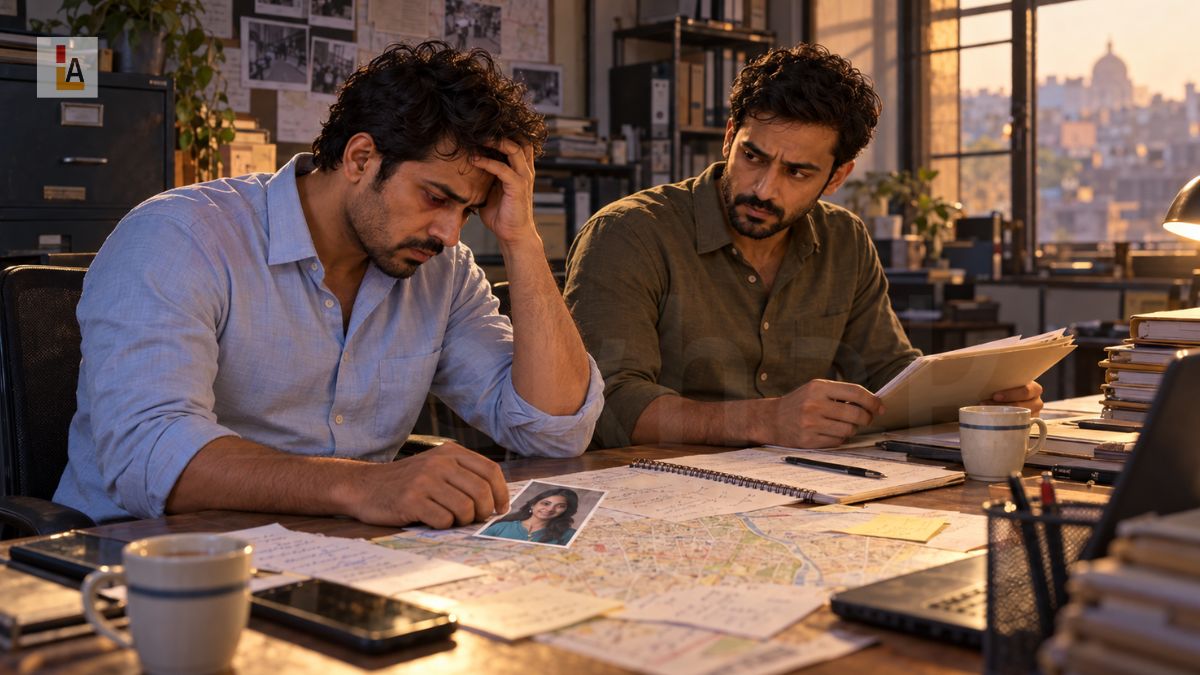
Pratik became increasingly withdrawn. He stopped going to the office unless there was something related to Maithili’s case. He barely ate and slept only when exhaustion made it impossible to remain awake.
Zubair took over their pending assignments, spoke to clients and continued coordinating with the police. He maintained detailed records of every lead they had pursued, including the ones that had failed.
One evening, Pratik’s mother visited him and suggested that he should spend a few days with the family.
“Beta, ghar chal. Yahan akele kya karega?”
“Main akela nahi hoon, Maa. Zubair hai.”
“Par beta…”
“Maa, please.”
She did not insist.
The police also began exploring whether Maithili’s disappearance could be connected to any of the cases Pratik and Zubair had handled. They reviewed threats received by the agency, previous clients and individuals who might have held a grudge against them.
Nothing substantial emerged.
One of their former clients, a businessman accused of financial fraud, was questioned after Pratik remembered receiving an angry message from him several months earlier. The man had been abroad when Maithili disappeared.
Another possibility involved a matrimonial investigation in which Pratik had exposed an extramarital affair. The husband had threatened legal action against the agency, but police found no connection to Maithili.
Every promising lead ended in disappointment.
On the thirty-second day, Inspector Malhotra called Pratik to the police station.
“We have reviewed the available evidence again. There is still no confirmed movement after she reached the colony. We are continuing the investigation, but I don’t want to give you false assurances.” “Sir, you think she’s dead?”
“I haven’t said that.”
“But you think so?”
Malhotra remained silent for a moment.
“We have to consider every possibility.”
Pratik left without another word.
Two houses down
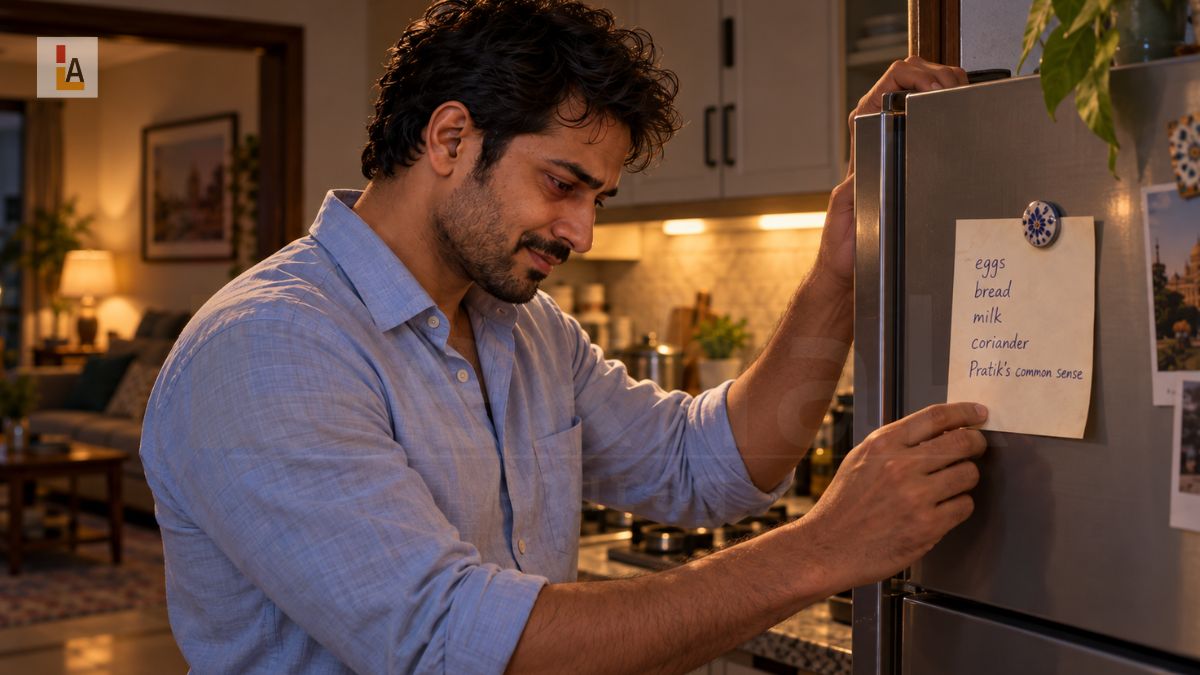
One evening, Pratik found an old shopping list stuck to the refrigerator. Maithili had written “eggs, bread, milk, coriander” and added “Pratik’s common sense” underneath. He photographed it and sent it to Zubair. Later, he remembered the time she had written “one new husband, preferably with functioning memory” because he had forgotten their anniversary. Pratik laughed while telling the story. Then he fell silent and put the list back on the fridge.
By the sixth week, Pratik had stopped counting the days on the calendar.
Maithili’s parents returned to Jaipur after several unsuccessful visits. Her mother continued calling twice a day. Her father had contacted lawyers and senior police officers, hoping someone might be able to accelerate the investigation.
Pratik kept Maithili’s belongings exactly where she had left them. Her phone remained on the dressing table, connected to a charger. Her handbag still hung behind the bedroom door. The ice cream he had bought that night had long since been thrown away, but the empty packet remained in the kitchen dustbin for several days before Zubair persuaded him to dispose of it.
One afternoon, Zubair found Pratik sitting on the bedroom floor, holding Maithili’s dupatta.
“Bhai, office chalna hai?” he asked.
Pratik shook his head.
“Okay. I’ll bring the files here.”
“Zubair?”
“Haan?”
“Do you think she left me?”
“No.”
“How can you be so sure?” “Because I knew her.”
Pratik looked at him.
“She loved you, Pratik. Whatever happened, I don’t believe she walked away without telling anyone.”
Pratik began crying.
Zubair sat beside him and waited.
For the next several days, they continued their routine. Mornings were spent speaking to police officers, afternoons reviewing old information and evenings visiting places connected to possible sightings.
Eventually, even those activities became less frequent.
On the forty-fifth night, Pratik called Zubair and asked him to come over.
He was sitting in the living room when Zubair arrived. A photograph of Maithili was lying on the table.
“I don’t think she’s coming back,” Pratik said.
Zubair sat beside him.
For several minutes, neither spoke.
Then Pratik began sobbing.
Until she was gone
Pratik held Maithili’s photograph against his chest and cried like a child. He had spent forty-five days searching for her, calling strangers, visiting police stations and following every possible lead. Now, sitting in the same living room where he had last seen her, he could no longer convince himself that she would return. “Zubair, maine kya bigaada tha kisi ka? Why would anyone do this to her?” he asked between sobs.
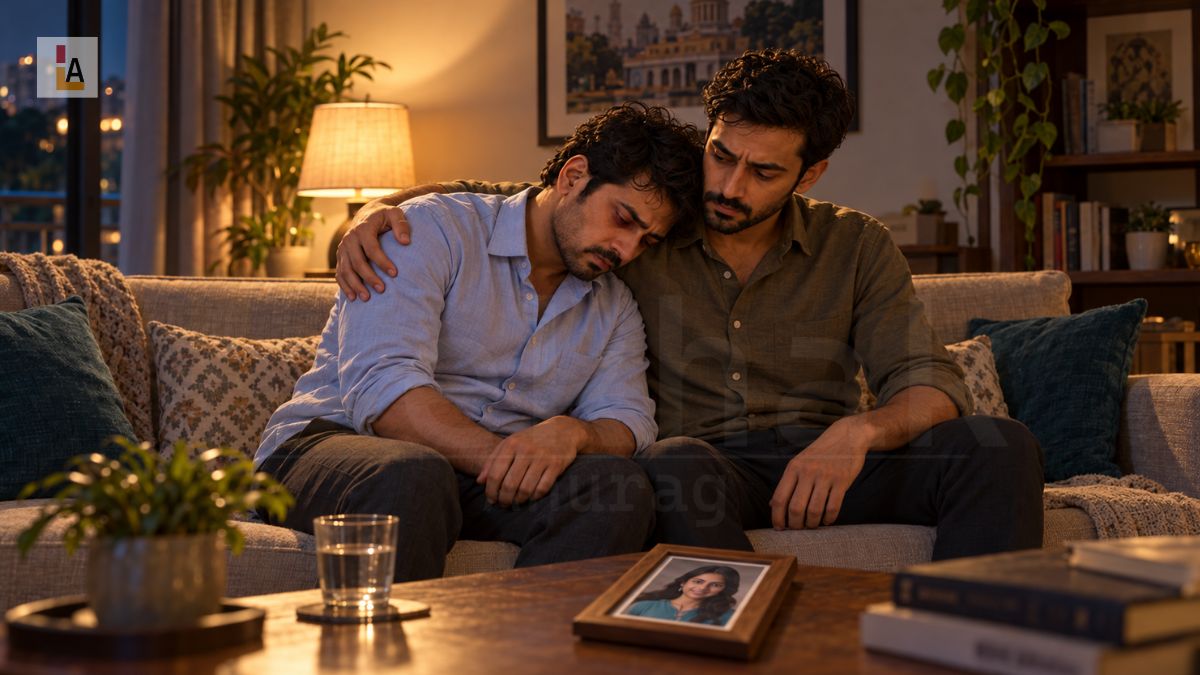
Zubair placed his arm around Pratik’s shoulders and pulled him closer. “I don’t know, bhai,” he whispered. Pratik buried his face against Zubair’s chest and continued crying. Zubair held him quietly, occasionally running his hand through his hair, just as he had done when they were children and Pratik had come to him after a fight at school.
— — — — —
I have loved Pratik for as long as I can remember. We were eight when we first met. He had joined our school in the middle of the academic year and was sitting alone during lunch. I offered him half my sandwich. He took the entire thing and gave me his banana in return. I hated bananas. I still do.
By the end of that week, we were sitting together in every class. By the end of the month, he had stopped spending time with the other boys. He would wait for me outside the school gate, come to my house after school and insist that we do our homework together. His mother used to joke that she had given birth to one son but was raising two.
I liked that arrangement.
In Class VIII, I began understanding that what I felt for Pratik was different from what other boys felt for their friends. I liked looking at him. I liked being close to him. I liked knowing things about him that nobody else knew.
When he started talking about girls, I listened. I even helped him write love letters to Nidhi in Class XI. She rejected him after three weeks. I bought him ice cream, listened to him complain about her for an hour and accompanied him home.
The following morning, he was perfectly fine.
That was one of Pratik’s qualities. He rarely remained upset for long. He had me, after all.
By college, I knew I was attracted to men. I also knew Pratik wasn’t. I never told him how I felt. There was no reason to complicate something that was already working perfectly well. I had his time, his trust and his friendship. He discussed everything with me, from his relationships to his family problems. When his father died, I handled most of the arrangements because Pratik was in no condition to do anything.
He trusted me more than anyone else.
We eventually started our investigation agency together. He handled clients and fieldwork, while I took care of research, accounts and documentation. We worked together almost every day. Sometimes he stayed at my house until two in the morning. Sometimes he slept on my sofa rather than drive home.
For years, I had everything I needed.
Then Maithili entered our lives.
I met her at a restaurant in Connaught Place. Pratik had been talking about her for weeks. She was intelligent, attractive and quite funny. I liked her. We got along well, and she seemed pleased that Pratik had a friend who knew him so well.
I organised most of their wedding. Pratik couldn’t even finalise the menu without calling me. Maithili hugged me after the ceremony and thanked me for everything.
“Thank God Pratik has you, Zubair. I don’t know what he would do without you.”
Neither did I.
The first few months were manageable. They invited me for dinner, we went out together, and Pratik continued visiting me. Then things started changing. He stopped coming over without informing Maithili. He began leaving the office at six instead of eight. Our weekend plans depended on whether she wanted to go somewhere. Once, I booked tickets for a cricket match, and he cancelled because they had planned to visit her parents in Jaipur.
“Bhai, next time pakka,” he said.
I gave the tickets to one of our employees.
It wasn’t about the cricket match. I could have gone alone. What bothered me was that Pratik had started treating our friendship as something he could accommodate whenever his marriage allowed it.
I had known him for more than twenty-five years. Maithili had known him for less than three.
I tried explaining this to her once.
“Arre Zubair, you two are practically married already. I’m the third wheel here,” she said, laughing.
I laughed too. There was no point arguing with her.
Instead, I tried making Pratik realise that their marriage was affecting our friendship. I exaggerated things Maithili said about his working hours. Occasionally, I gave them different versions of the same conversation. Once, I told Maithili that Pratik had complained about her controlling his schedule.
They argued that evening.
The following morning, Pratik arrived at the office carrying breakfast for both of us.
“Sab sort ho gaya, bhai. Marriage is complicated,” he said.
Apparently, they had discussed everything and cleared up the misunderstanding.
This happened repeatedly. Whatever I said, they eventually spoke to each other and resolved it. I even suggested that Pratik should take a long assignment outside Delhi, thinking some distance might help. Maithili encouraged him to accept it and offered to accompany him.
That was when I realised that ordinary disagreements would not be enough.
Maithili eventually noticed that many of their arguments involved things I had told one of them. She was cleverer than I had initially assumed.
One evening, she asked whether I had a problem with their marriage. I denied it. She didn’t argue, but I could tell she wasn’t convinced.
A few days later, she called and said she wanted to speak privately. She didn’t want Pratik involved because she believed it would damage our friendship. I agreed immediately.
Pratik was in Gurugram that evening. Maithili was at home. I asked her to come outside for a few minutes. She left her phone, handbag and keys behind because she expected to return shortly.
We walked towards the end of the street.
Harish Batra was standing outside his gate. He greeted us, complained about somebody parking near his house and went inside. Maithili laughed after we passed him.
“Batra uncle ko parking minister bana dena chahiye,” she said.
I remember that because it was the last joke she made.
She asked me directly whether I had been interfering in her marriage. She mentioned several conversations and explained how she had compared my accounts with Pratik’s. She had worked out that I was responsible for most of their recent arguments.
I told her she was overreacting.
She said she would speak to Pratik if it happened again.
Then she said something particularly foolish.
“Zubair, you need to understand that Pratik has his own life. You cannot expect him to spend his entire life with you.”
She had apparently decided that twenty-five years of friendship could be reduced to a lecture about personal boundaries.
I had already considered what would happen if Maithili were no longer around. I knew Pratik well enough to understand that he would need someone to help him through such a situation. His parents were getting old, Maithili’s family lived in Jaipur, and most of his other friends had moved away.
There was only one person he would depend on.
Me.
That evening, I killed Maithili.
I took her body to a forested area outside Delhi, dismembered it and scattered the remains. Nothing identifiable has been recovered. I know the police have searched several locations, but they have never found her.
When Pratik returned home and discovered that she was missing, he came straight to my house.
I opened the door.
“Maithili nahi mil rahi!” he shouted. I followed him home, checked the rooms and helped him search the neighbourhood. At the police station, I explained the situation calmly because Pratik was shouting at everyone. I also made sure he ate, rested whenever possible and attended every meeting with the investigating officers.
It was important that he had someone dependable beside him.
The investigation itself was straightforward in the beginning. The police checked her workplace, her phone records and the colony cameras. We conducted our own enquiries. I knew how Pratik worked, what questions he would ask and which leads he would consider important.
The difficulty was that other people occasionally noticed things.
Batra was the first.
He had seen Maithili walking with me that night. Initially, he thought nothing of it. But after learning that she was missing, he began trying to remember the conversation and the time. He was the sort of man who enjoyed involving himself in other people’s affairs.
He could have told the police that Maithili was last seen with me.
That would have been inconvenient.
I killed him.
His death became another police investigation. Pratik wondered whether it was connected to Maithili’s disappearance, but there was nothing available to establish a connection.
Constable Deepak Yadav was next.
He had been examining CCTV recordings from roads leading outside Delhi. One recording showed my car travelling towards the forest on the night Maithili disappeared. The registration number wasn’t completely visible, but Deepak knew enough about the vehicle to begin asking questions.
He also knew I had told the police I was at home that evening.
He hadn’t established anything conclusive, but he was persistent. I had met enough policemen through our work to recognise the type. He would keep checking until he found something.
I killed him before that happened.
His death was investigated separately. The footage he had been examining was incomplete, and the police could not establish that the vehicle belonged to me.
Then came Ramesh Gupta. His shop’s CCTV system had recorded something that could have linked me to Maithili’s disappearance. I discovered the problem while following the lead with Pratik. The relevant footage disappeared before it could be recovered, and Gupta was killed.
Pratik was particularly upset about that one.
“Every time we get close to something, something happens!” he shouted outside the police station.
He was right.
Pratik insisted we revisit the market and question the shopkeepers again. I went with him. We spent several hours there. It kept him occupied, and there was nothing useful left for us to find.
Four people had died by then, including Maithili. I didn’t consider the other three particularly important. They had become involved in something that did not concern them. Had they known nothing, they would have continued with their lives.
The police did examine the deaths together. Deepak had left enough information for Malhotra to question me about my car, and my visit to Gupta’s shop brought him back to me. He asked several questions more than once. I had to be careful. But Deepak’s notes led back to the same blurred recording. Gupta had told Pratik that part of his footage was accessible; nobody could now establish what it had shown. The shopkeeper who saw me arrive had not seen me leave. Malhotra kept asking, but the next interview brought him no further than the last. Pratik defended me whenever the subject came up. He was offended that the police would even ask.
Malhotra also requested the agency’s records of our search: the timeline, the calls we had made and the leads we had followed. Pratik handed them over without checking them. He knew how particular I was about paperwork.
I had prepared those records myself.
By the fourth week, the investigation had slowed considerably. The police continued working, but there were fewer leads to pursue. Pratik stopped sleeping properly and began spending most evenings at my house.
His mother asked him to return home for a few days.
“Main akela nahi hoon, Maa. Zubair hai,” he told her.
I was sitting beside him when he said it.
That was the first sensible decision he had made in weeks.
The only remaining problem was Maithili herself.
Not physically, of course. That matter was settled.
But Pratik continued talking about her. Every meal reminded him of something she cooked. Every television programme reminded him of something they had watched together. He kept her phone charged and refused to move her clothes from the wardrobe.
He even spoke about adopting a dog because they had once discussed getting one.
I listened to everything. Sometimes he repeated the same story three or four times. I never interrupted him. There was no benefit in making him feel that I was becoming impatient. He needed to associate my presence with comfort, not another source of irritation.
I knew he would eventually return to work. His parents would stop visiting so frequently. The police would move on to other cases. His colleagues would stop asking about Maithili every time they saw him.
Grief is a demanding thing, but ordinary life has its own demands.
I could afford to wait.
I look down at Pratik now. He has stopped crying but is still holding Maithili’s photograph. His head is resting against my shoulder, just as it did when we were children.
“Zubair?” he whispers.
“Haan, bhai?”
“Do you think I’ll ever see her again?”
Of course not. How many times is he going to ask the same question?
“I don’t know, bhai,” I reply, gently stroking his hair.
He closes his eyes.
I take the photograph from his hands and place it on the table. He doesn’t object. I adjust the cushion behind his back and ask whether he wants some water.
He shakes his head.
“Tu hai na mere saath?” he asks.
I smile.
“Hamesha, bhai.”
He moves closer and rests his head against me again.
I have waited more than twenty-five years for Pratik to understand that nobody will ever be as important to him as I am. Maithili delayed that understanding for a few years, but she is no longer an obstacle. The others are gone too. Nobody knows what happened, and Pratik has stopped questioning my involvement in the investigation.
He will need time to get over her. I have already accepted that. There is no reason to hurry. He trusts me, he needs me, and he has nowhere else he would rather be tonight.
I remember our first day at school, when he took my sandwich and gave me his banana. He had assumed I would accept whatever he offered because I wanted him to sit with me. He was right.
I look at the photograph on the table and turn it face down.
Pratik doesn’t notice.
I put my arm around him again.
This time, I won’t have to share him.
© Lekhak Anurag. Any unauthorised reproduction, personal or commercial, without permission is prohibited. For reproduction or commercial use of the story, please ping me on mailme[at]lekhakanurag[dot]com.
You can read the story on X here.